
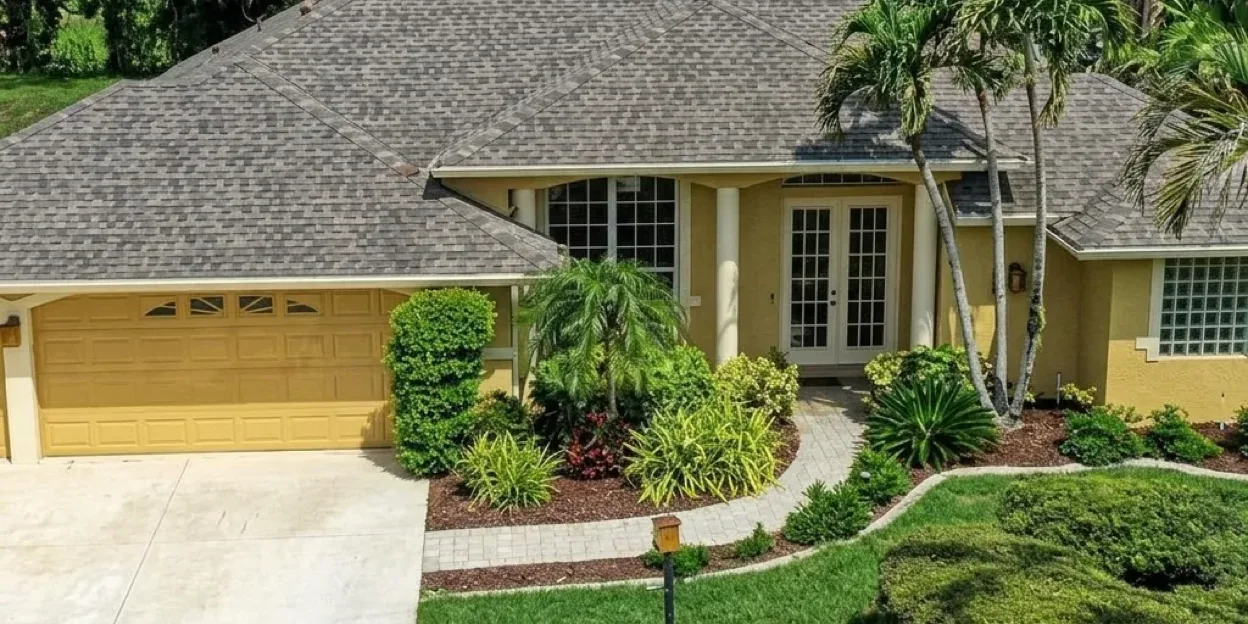
Murdock is the crossroads of Port Charlotte, where US 41 meets Route 776 and the county keeps its government. The Charlotte County administration center on Murdock Circle, the mall, the big-box strips, and the hospital corridor are here, and behind them are the subdivisions built from the 1980s onward: block homes on quarter-acre lots, hip roofs, shingle giving way to tile on the newer streets, and several large manufactured-home communities along the highway.
Milton's tornadoes on October 9, 2024, crossed this part of the county, and a tornado is a different kind of roof damage from a hurricane: one house stripped to the deck while the neighbor's roof is untouched. Ian's wind two years earlier was the wider event, and it lifted shingle across every 1980s subdivision between the highways.
This site connects Murdock homeowners by phone with an independent local roofing contractor. It does not perform the work.
A 1990s shingle roof that lost tabs in Ian and was patched is a roof inspection so there is a dated photo record before the next renewal. A roof at the end of its life on a home the insurer is asking about is a roof replacement fastened to the county's design wind speed. A manufactured home with a leaking roof-over is a roof repair by a contractor who works those roofs, and the caller should say it is a manufactured home.
This is where the permits are. Charlotte County Community Development is on Murdock Circle, and every roofing permit in the unincorporated county is issued from that building. Charlotte County Utilities is next door and is the number for a water main problem after a storm, which is a separate call from the roof.
Call (941) 294-6154 to be connected with a local roofing contractor serving Murdock.
A leak traced to its real entry point, then the flashing, boot, tile, or shingle that let it in put right and photographed.
Tear-off to the deck, new underlayment, and tile, metal, or shingle fastened to the Florida Building Code, with the county permit pulled.
A tarp on the opening before the next rain band, then photos and a written scope of what the wind took.
A walk of the roof and the attic side, with photos and a written condition report you can hand a buyer or an insurer.
The state OIR-B1-1802 form completed on your roof's straps, deck nailing, and water barrier, so your agent can apply the credits.
Dated photos, a line-item scope, and a contractor at the adjuster visit, so the claim is about what the roof shows.