
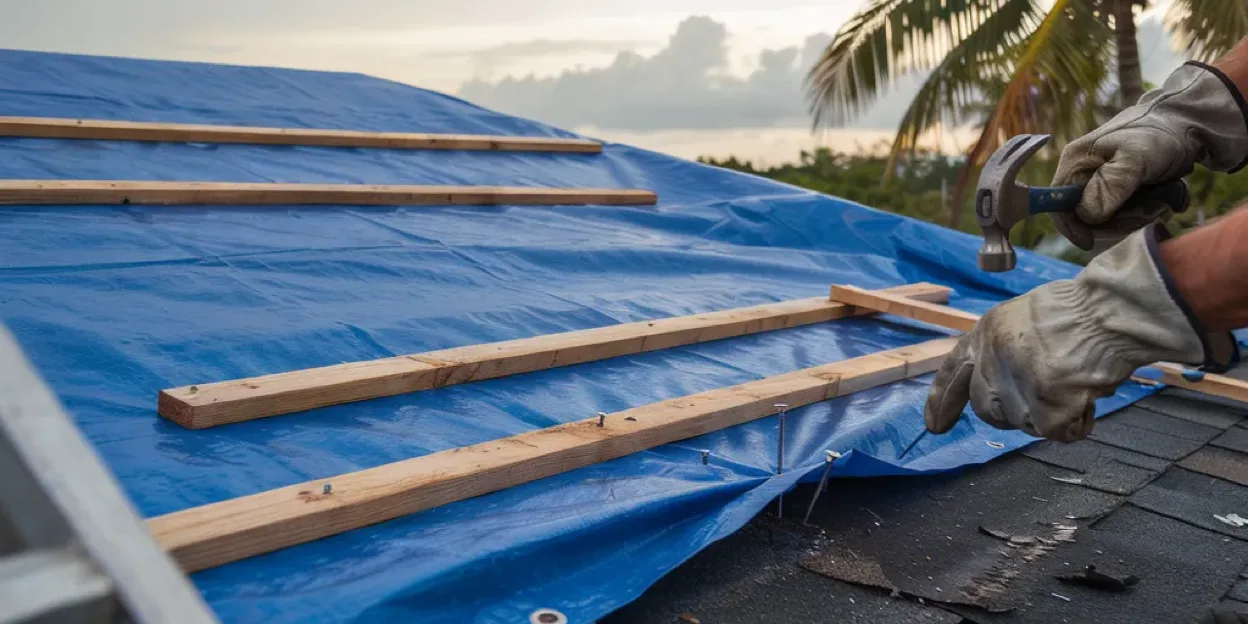
The adjuster is coming Thursday. The tarp has been on since the storm, the bedroom ceiling has been cut open where it got wet, and you have a folder of phone photos and no idea whether they show what the adjuster needs to see. This site connects you by phone with an independent local contractor who documents roof damage in Charlotte County for homeowners filing a claim.
Nothing on this page is a promise about what your policy will pay, and nobody on this site can make one.
The contractor gets on the roof and photographs the damage with a date stamp, before anything else is disturbed. They write a line-item scope: what the wind removed, what it loosened, what has to come off to fix it, and what the code requires when it goes back on. They separate storm damage from wear, because the adjuster will.
If the adjuster visit is scheduled, the contractor can be on the roof at the same time to point at the damage. That is where most disputes get settled, at the ridge with both parties looking at the same crease.
Photograph everything, inside and out, before cleaning anything up. Keep the receipt for the tarp and anything else bought to protect the house. Report the claim to your carrier; Florida gives one year from the date of loss to report a new claim and the clock runs whether or not you knew about the damage. Write down the claim number and the adjuster's name.
Do not sign anything at the door. Then call for the contractor's documentation.
A roofing contractor can document, write a scope, tarp, repair, and stand on the roof during the adjuster visit. Florida law reserves negotiating or adjusting the claim on your behalf for licensed public adjusters and attorneys. A contractor who offers to handle the claim, waive or pay your deductible, or file for you is offering something the law does not allow, and a 2021 state law lets the state discipline a contractor for it.
Since January 2023, new Florida policies no longer permit assignment of benefits to a contractor. The claim stays in your name and the contractor is paid by you. If a claim becomes a real dispute, a public adjuster or an attorney is the professional for that.
Charlotte County has filed roof claims by the tens of thousands, after Charley in 2004, Ian in 2022, and Milton in 2024. Most Florida policies carry a separate hurricane deductible of 2 to 5 percent of the dwelling coverage, which is a very different number from the flat deductible on other perils, and it applies to a named storm. Know which deductible applies before setting expectations.
Roof age matters too. A carrier can weigh a roof's age and prior condition, and an old tile roof on worn underlayment is a harder claim than a ten-year-old roof that lost a section. A roof inspection report from before the storm is the clearest evidence of prior condition, which is one reason seasonal owners book them in spring. When the claim is paid, the repair or roof replacement still needs a county or city permit, and the contractor pulls it. Emergency protection in the first day is covered on the storm damage roofing page. The state's consumer help line for insurance questions is run by the Florida Department of Financial Services.
Have the address, the date of the storm, and the claim number if you have one. Be ready to say what the roof is made of, whether a tarp is up, and when the adjuster is coming. Say whether the roof has been inspected since the storm. Call (941) 294-6154.
 Standing by
Describe what you see in plain words. The call is routed to an independent local roofing contractor who works tile, metal, and shingle roofs in your part of Charlotte County.
A leak traced to its real entry point, then the flashing, boot, tile, or shingle that let it in put right and photographed.
Tear-off to the deck, new underlayment, and tile, metal, or shingle fastened to the Florida Building Code, with the county permit pulled.
A tarp on the opening before the next rain band, then photos and a written scope of what the wind took.