
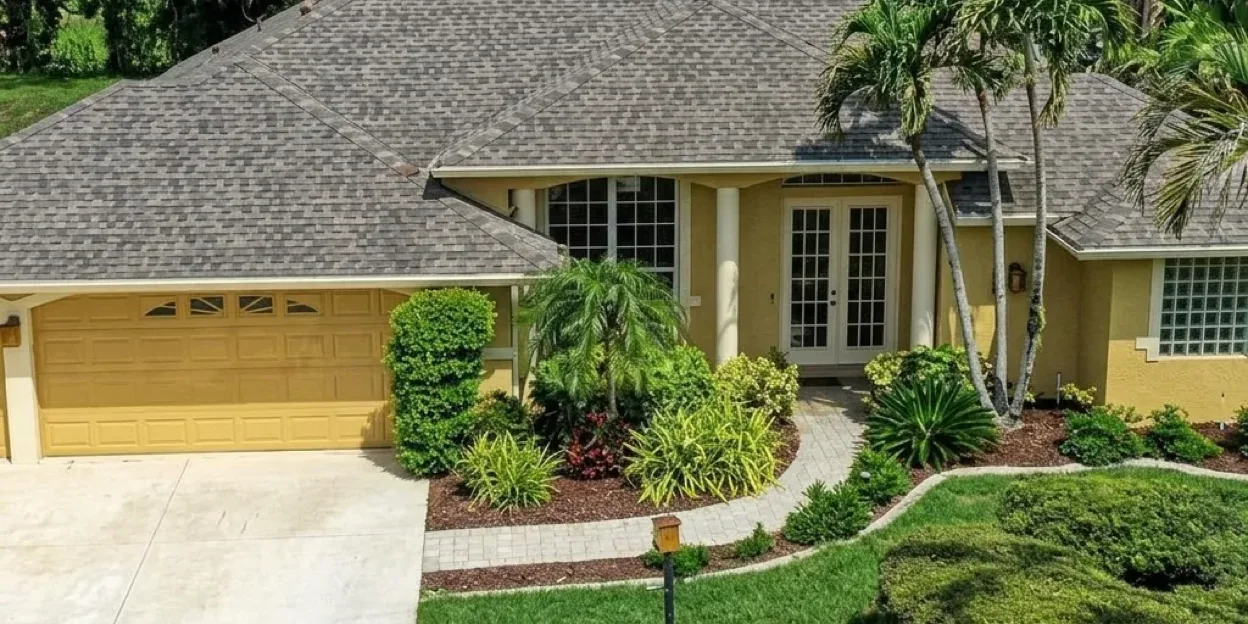
From the air, Rotonda West is a wheel. The Cavanagh Communities plat from 1969 laid out spokes and rims of streets around a central hub between Placida and Englewood, with canals between the sections and golf fairways running through them. The houses came slowly, in waves from the 1970s through the 2000s, and the community is deed-restricted, so the rooflines along a street tend to match.
Ian hit this corner of the county squarely on September 28, 2022, with nothing between the wheel and the Gulf but Cape Haze and a few miles of mangrove. A meaningful share of Rotonda's roofs were replaced in the two years after, which means the community now has post-Ian roofs, 2000s-era roofs reaching underlayment age, and 1970s originals side by side.
This site connects Rotonda West homeowners by phone with an independent local roofing contractor. It does not perform the work.
A cracked tile from a golf ball on a fairway lot shows up as a leak a season later and is a roof repair once the crack is found. A 2000s roof at the end of its underlayment is a roof replacement, and the contractor's scope should name the profile and color the association will approve. A roof that went on after Ian and has never been documented for the insurer is a wind mitigation form waiting to be filed.
The Rotonda West Association maintains the deed restrictions, and replacements and material changes go through its review. Like-for-like repairs usually do not. A tarp after a storm never waits on association paperwork; file after the weather passes. Roofing permits go through Charlotte County Community Development.
Call (941) 294-6154 to be connected with a local roofing contractor serving Rotonda West.
A leak traced to its real entry point, then the flashing, boot, tile, or shingle that let it in put right and photographed.
Tear-off to the deck, new underlayment, and tile, metal, or shingle fastened to the Florida Building Code, with the county permit pulled.
A tarp on the opening before the next rain band, then photos and a written scope of what the wind took.
A walk of the roof and the attic side, with photos and a written condition report you can hand a buyer or an insurer.
The state OIR-B1-1802 form completed on your roof's straps, deck nailing, and water barrier, so your agent can apply the credits.
Dated photos, a line-item scope, and a contractor at the adjuster visit, so the claim is about what the roof shows.